
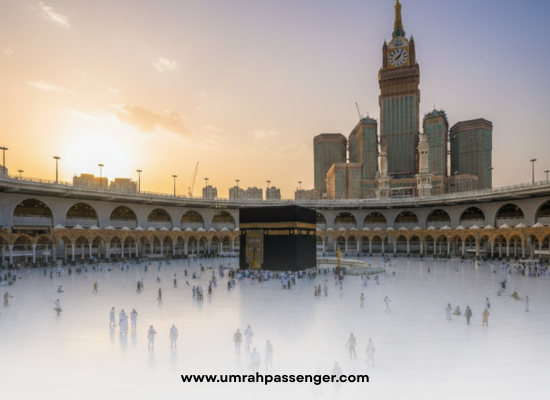
When planning your Umrah, you dream of peaceful Tawaf, calm prayers, and meaningful moments near the Kaaba. Yet crowds can affect your experience. That is why knowing the best time to perform Umrah matters so much.
When you choose the right season, day, and hour, you enjoy comfort, focus, and spiritual clarity. In this guide, you will discover the least crowded time for Umrah, the best month to perform Umrah, and the best time of the day to perform Umrah.
Let’s help you plan a smooth and rewarding journey with Umrah Passenger.
Best Months for a Peaceful Umrah
The least crowded month for Umrah usually falls in Safar, Rabi al-Awwal, and parts of Muharram after Ashura. These months bring moderate weather and fewer international travelers. Many pilgrims also find these months the quietest time to do Umrah.
If you want calm surroundings, avoid Ramadan, school vacations, and public holidays in Saudi Arabia. These periods bring heavy crowds from all over the world.
The best month to perform Umrah also depends on your comfort with the weather.
- The winter months, such as December and January, offer cooler temperatures but slightly higher crowds due to the holidays.
- Late February and early March often strike a nice balance between weather and crowd levels.
Least Crowded Days of the Week in Makkah
Weekends in Saudi Arabia fall on Friday and Saturday. These days attract local visitors and short-term pilgrims. Mosques feel full, especially after Jumu’ah prayer.
If you want the least crowded time for Umrah, plan your Tawaf and Sa’i from Sunday to Wednesday. These weekdays feel calmer and more organized. You move more freely around the Mataf and prayer areas.
Travelers searching for the best times to visit Makkah often overlook weekdays. Yet these days give you space, comfort, and peace of mind.
Best Time of the Day to Perform Umrah
Crowd levels change dramatically throughout the day. Early mornings before Fajr and late nights after Isha usually stay quieter. Many pilgrims rest at these times, which creates open space for Tawaf.
If you ask the best time to perform Umrah during the day, late morning after sunrise also works well. You avoid peak tour group arrivals and prayer congestion.
Choose early morning hours or late-night slots. These periods also offer the best time to touch the Kaaba, when security allows closer access.
Best Time to Perform Umrah for Families and Kids
Traveling with children requires extra planning. Kids need rest, hydration, and less walking stress. Crowds can overwhelm them quickly.
The best time for Umrah with kids often falls during off-peak months with mild weather. Early morning or late evening Tawaf keeps children comfortable. Avoid midday heat and the heavy crowd rush.
Parents also look for the best time to do Umrah with kids when hotel distances stay short, and transport remains easy. Off-season travel gives you better room options near Haram.
When you choose the right timing, your children enjoy the experience instead of feeling exhausted. You also stay relaxed and confident throughout the journey.
Best Time to Perform Umrah for International Travelers
Different countries follow different vacation cycles. This affects flight prices and crowd levels.
The best time to perform Umrah for US residents often falls outside summer holidays and Christmas breaks. Late winter and early spring usually bring fewer American travelers and better airfare deals.
The best time to perform Umrah for Pakistanis often comes after local school vacations and wedding seasons. February, March, and early November work well for balanced crowds and weather.
The best time to perform Umrah for Indians usually avoids Diwali holidays, summer breaks, and long festival seasons. Late January and February provide calmer conditions.
Why Timing Matters for Your Umrah?
Makkah welcomes millions of pilgrims every year. Crowds rise during peak religious seasons, school holidays, and long weekends.
- When you travel during busy periods, you face longer walking times, slower Tawaf, and limited hotel availability.
- When you choose the best time for Umrah, you enjoy shorter queues, easier access to prayer areas, and better hotel rates.
- You also feel more relaxed and focused. Your ibadah becomes deeper when distractions stay low.
That is why smart timing improves both comfort and spirituality.
Conclusion
Every pilgrim seeks comfort, peace, and spiritual connection. The right timing unlocks all three. By selecting the least crowded time for Umrah, you move easily, pray deeply, and reflect fully.
Remember that weekdays stay calmer than weekends. Early mornings and late nights provide the best time of the day to perform Umrah. Off-peak months deliver the best time to perform Umrah with fewer crowds and better prices.
Use this knowledge to design a journey that supports your faith and comfort.
Ready to plan your Umrah the right way? Contact Umrah Passenger today and let us help you secure the ideal dates, hotels, and travel arrangements.